
Medical acupuncture and dry needling in London
Medical acupuncture, also known as dry needling, is a precise and clinically informed method used to reduce pain, release muscular tension and improve movement. It targets sensitive trigger points, irritated tissues and areas of heightened neural activity. At L’OSTEO, we integrate medical acupuncture into your treatment plan when it offers a faster or deeper response than manual therapy alone.
Understanding how medical acupuncture works
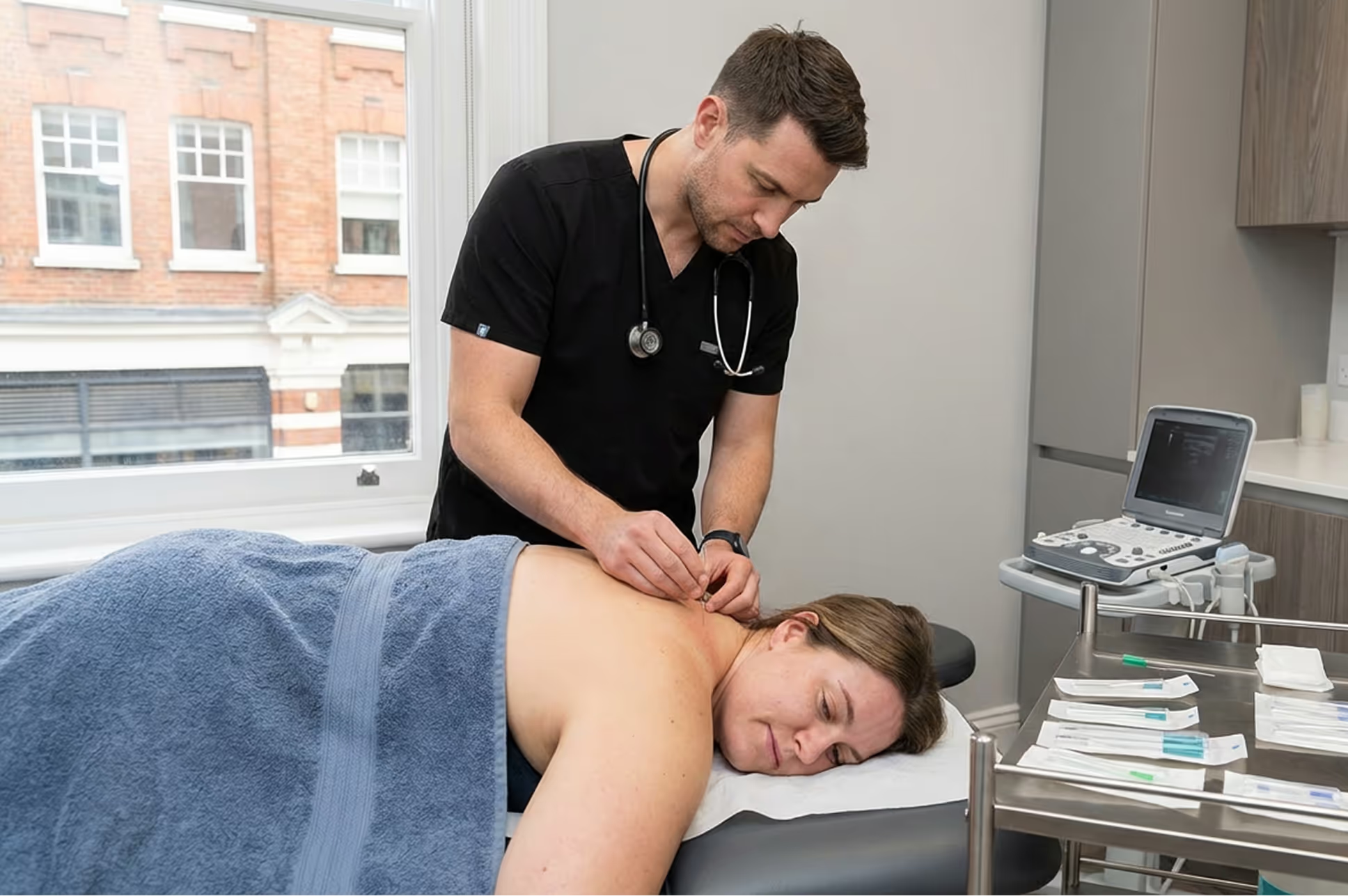
Dry needling uses very fine, sterile needles inserted into specific points within muscles, fascia or irritated soft tissues. These points are usually the areas that feel tight, reactive or tender to pressure.
When the needle enters the tissue, several evidence based responses occur:
- A local contraction reflex releases tension within the muscle
- Blood flow increases, improving oxygen delivery and tissue healing
- Chemical mediators linked to pain, such as substance P, begin to decrease
- The nervous system becomes less reactive, calming oversensitive pain pathways
- Deep trigger points soften, reducing referred pain patterns
You may benefit from medical acupuncture if you experience:
- Deep muscular tightness
- Tension headaches
- Neck or shoulder pain
- Chronic trigger points
- Post training soreness
- Localised muscle fatigue
- Tendon irritation
- Pain that does not respond fully to stretching or massage
We look at:
- The specific muscles and fascial chains involved in your pain
- Trigger points that refer pain to other regions
- Movement patterns that repeatedly overload certain tissues
- Neural tension that keeps muscles reactive
- Your training load, work posture and physical demands
- How well your body recovers under stress
Our goal is to understand the origin of your pain and use dry needling strategically to treat the exact tissues involved.
How medical acupuncture helps relieve pain
Dry needling is not a standalone therapy. It is a precise technique that supports your body’s natural ability to heal and restore balance. We focus on the physiological effects that matter most for the specific condition being treated.
During your sessions, we may use:
- Targeted needling for trigger point release to deactivate painful points deep within the muscle and reduce referred pain
- Needling around tendons and fascial attachments to calm irritation and improve local blood flow
- Neural pathway needling when pain is driven by nerve irritation or hypersensitivity
- Integration with manual therapy to improve mobility and support healthier movement patterns
- Breathing and relaxation strategies to reduce sympathetic drive and support the parasympathetic system for better recovery
- Rehabilitation exercises to ensure the released tissues regain strength and function
The treatment often leads to reduced tension, improved movement and a sense of lightness in previously tight or heavy areas. Our aim is long term improvement by changing the way your muscles and nervous system interact, not just creating a momentary release.
Patients Testimonials
Healing is a team effort. Your wins become our proudest moments.

5.0/5

From +80 Reviews
Hachim is super professional and knowledgeable. Thank you for the great session.

Fantastic session and instant relief of back and neck pain. Couldn't recommend more.

I've been a customer for over 5 years, and the only thing I can say is that Hachim is an amazing professional that understands to perfection his job, never a disappointment, he keeps me going… thanks a lot Hachim 🙏

Etienne is great! Not only he fixes but he also explains all.

Fantastic session with Etienne. Really helped me with my tense shoulder and explained all the exercises very well. Will definitely be back and can highly recommend L’Osteo.

Zahrah was very professional and friendly, she took the time to explain everything and we even had a lovely conversation about life 😊. Would highly recommend.

I can honestly say Zhara is one of the kindest, most dedicated, and skilled health professionals I’ve ever met. She often kindly extended sessions at no extra cost to make sure I got the full benefit. Zahrah also took time to research genuine options for other health concerns. She’s truly outstanding — I can’t recommend her enough.

Ed was really professional and friendly and best of all very good. I felt so much better and relaxed after seeing him. My pain was massively decreased. I recommend him very highly.

Hachim's treatments are transformatory. Through his help, I have experienced a meaningful reduction in pain, increased mobility and have been able to gradually return to running over the last few weeks of treatment. I have absolute trust in his approach and would highly recommend his practice.

Excellent treatment session at L’OSTEO. Etienne really took the time to explain what’s going on in a way that was easy to understand. Super knowledgeable and clearly passionate about what he does. What I really liked is that the focus is on finding long-term solutions, not just managing symptoms. You feel like you’re in good hands, my back felt much better afterwards. Highly recommend!

I had a great experience with Étienne. He took the time to thoroughly explain his treatment approach, which immediately put me at ease. What really stood out was his introduction to breath work, something I hadn’t experienced before or considered doing. I left feeling better, more informed, and with tools I can actually use moving forward. Highly recommend!!

After several sessions with Zahrah, I can honestly say she is one of the kindest, most dedicated, and skilled health professionals I’ve ever met. She offered a wealth of advice, encouragement, treatment suggestions, and follow-up emails to support me with my chronic neck pain. She’s truly outstanding — I can’t recommend her enough.

I visited Dr. Hachim Boutouil for lower back pain from sports, and I’m so glad I did. He listened carefully, was very gentle, and treated me with needles that worked incredibly well. My pain is now completely gone. I highly recommend him!

Who knew that I'd been holding my breath all this time? Etienne at L'osteo is the answer, and he introduced me to somatic breathing. Following holistic assessment I have gone on to have acupuncture, cupping and massage to redress the balance of body and mind. You are safe in his hands. Thank you Etienne.

PRICING PLANS
Simple, transparent pricing
for your treatment
Back pain is treated with standard osteopathy sessions at L’OSTEO.
Prices are the same as our general osteopathy treatments.
START WITH THIS
Initial Consultation + Treatment
£95(45min.)
£130(60min.)
- Full assessment of your back pain, posture and medical history
- Clear explanation of what is happening and why it hurts
- First hands on treatment and a personalised plan to move forward
30min. up to 1 hour
Follow-Up Treatment
£130(60min.)
£95(45min.)
£80(30min.)
- Review of your progress since the last session
- Targeted hands on treatment to keep reducing pain and stiffness
- Updated exercises and advice tailored to your daily routine






Call Us for Home Visits
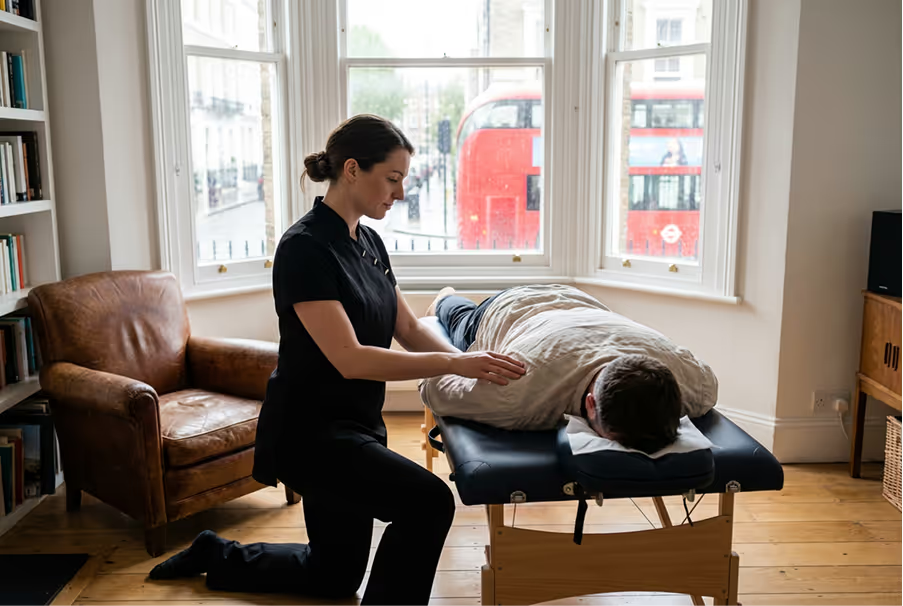
Enjoy expert osteopathic care in the comfort of your own home. Our home visit service brings the same level of clinical excellence, personalised assessment and hands on treatment directly to your space. Ideal for busy professionals, parents, post injury patients or anyone who prefers a more private and convenient experience.

Comfort and Convenience
Personalised Attention
Ideal for Limited Mobility


FAQ
Your Questions Answered
Everything you need to know about osteopathy and L’OSTEO.
What is Osteopathy ?
Osteopathy is a way of detecting, treating and preventing health problems by moving, stretching and massaging a person’s muscles and joints. Osteopathy is based on the principle that the wellbeing of an individual depends on their bones, muscles, ligaments and connective tissue functioning smoothly together. (NHS)
What conditions can osteopathy treat?
Osteopathy can help with back and neck pain, joint and muscle injuries, sciatica, headaches, sports injuries, postural issues and general musculoskeletal pain. It focuses on restoring healthy movement so your body can function at its best.
Can people of all ages use osteopathy?
Yes. Osteopathy is suitable for all ages including children, teenagers, adults, athletes and older individuals. Treatment is always adapted to each patient’s needs and health profile.
How long does an osteopathy treatment session last?
Initial consultations usually last 45 to 60 minutes and include assessment, diagnosis and treatment. Follow up sessions are 30 to 60 minutes depending on your condition and treatment plan.
Is osteopathy covered by health insurance or the NHS in the UK?
Many private health insurers cover osteopathy depending on your policy. Osteopathy is not routinely available on the NHS so most patients see us privately. We can provide invoices for insurance reimbursement.
Are there any risks or side effects associated with osteopathy?
Osteopathy is generally safe. Some patients may experience mild soreness, fatigue or temporary discomfort for 24 to 48 hours after treatment. Serious side effects are extremely rare. If you experience any severe side effects, please contact your doctor or seek appropriate medical help.
Can osteopathy be used alongside other medical treatments?
Yes. Osteopathy is fully integrated within the medical system and we work in close partnership with GPs and specialist doctors. We focus on our scope of practice and collaborate with other healthcare professionals whenever needed to ensure you receive the best possible outcome.
How many osteopathy sessions will I need to see results?
This depends on the patient and the diagnosis. Most people notice an improvement between three to five sessions, although some very mild conditions may resolve after just one visit.